
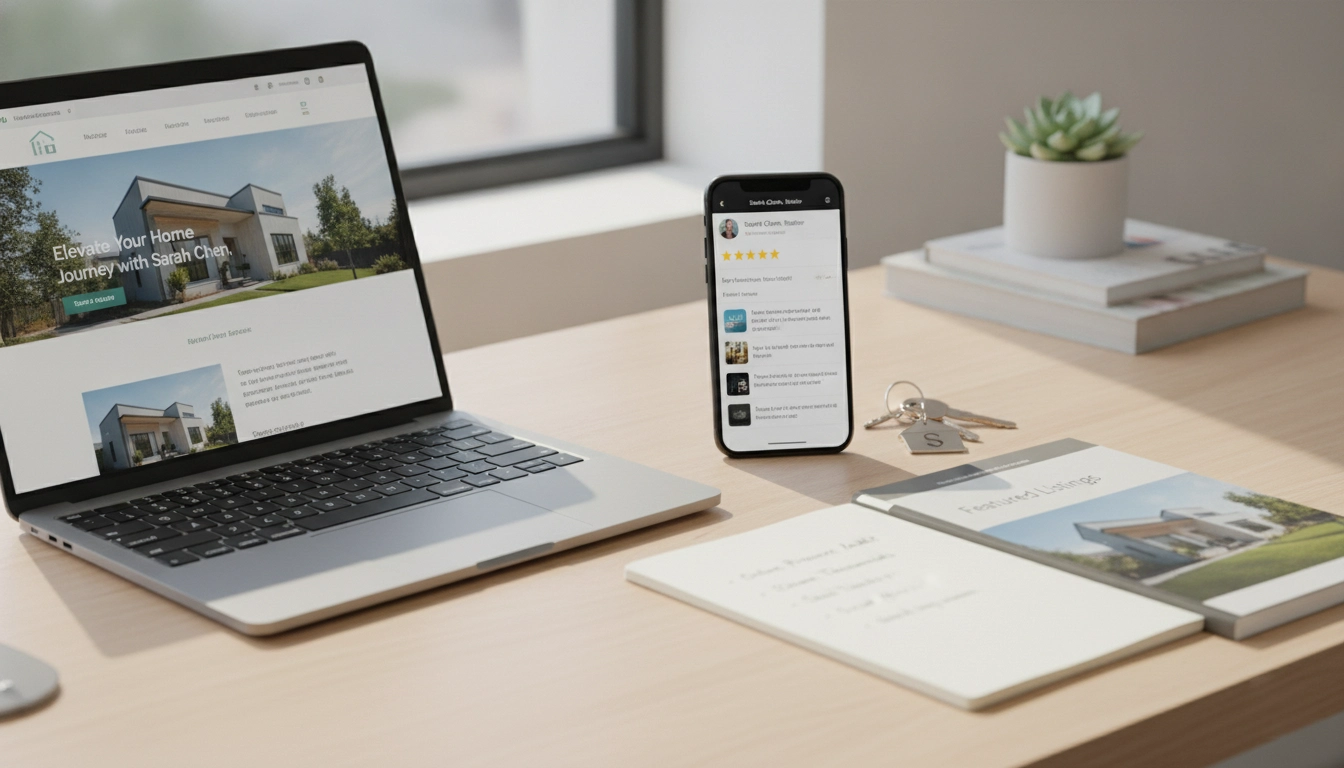
Most Realtors think trust starts on the first call.
It does not.
Trust often starts before the prospect ever speaks to you.
It starts when they hear your name from a friend.
It starts when they Google you.
It starts when they visit your website.
It starts when they read your reviews.
It starts when they check your Google Business Profile, social profiles, bio, photos, and local presence.
By the time a seller or buyer reaches out, they may have already formed an opinion about you.
That opinion may be helping you.
Or it may be creating doubt.
This is why pre-call trust matters.
You may be great in person. You may be excellent on listing appointments. You may know your market, communicate clearly, and take strong care of your clients.
But before you get the chance to show that, your online presence has to speak for you.
If your website looks outdated, your Google profile is incomplete, your reviews are hard to find, and your bio sounds generic, prospects may hesitate before you ever know they were interested.
A strong online presence helps prospects feel safer reaching out.
It does not replace the relationship.
It supports the relationship before the first conversation.
For serious Realtors, that matters.
Because people Google you before they choose you.
What Is Pre-Call Trust?
Pre-call trust is the confidence a prospect builds before they ever speak with you directly.
It is shaped by what they find online.
For Realtors, pre-call trust usually comes from:
- Your website
- Google Business Profile
- Google reviews
- Agent bio
- Headshot and brand visuals
- Testimonials
- Local content
- Social profiles
- Zillow, Realtor.com, and brokerage profiles
- Search results
- AI/search visibility signals
Each piece helps answer a simple question in the prospect’s mind:
“Can I trust this person with my real estate decision?”
That question matters because real estate is high stakes.
A seller is not just hiring someone to put a home on the market. They are choosing someone to help price, prepare, market, negotiate, and sell one of their biggest financial assets.
A buyer is not just choosing someone to open doors. They are choosing someone to guide them through neighborhoods, pricing, offers, inspections, financing timelines, and major decisions.
Before they talk to you, they want reassurance.
Your online presence should give them that reassurance.
For more on the full system behind this, read: The Online Presence Stack Every Serious Realtor Needs
Why Trust Starts Before the First Conversation
A prospect does not need to talk to you to start judging your credibility.
That may sound harsh, but it is how people make decisions now.
They research first.
They compare.
They verify.
They look for proof.
They want to know whether you seem professional, current, experienced, and safe to call.
This happens with referrals too.
A past client may recommend you. A friend may text your number. A referral partner may introduce you by email.
But the referred person may still look you up before responding.
A referral gets you considered.
Your online presence helps the prospect feel confident enough to call.
If what they find reinforces the referral, trust grows.
If what they find feels weak, outdated, or unclear, doubt enters.
The prospect may never tell you that your online presence created hesitation.
They may simply move on.
That is why pre-call trust is so important.
You are being evaluated before you are contacted.
For more on referral behavior, read: Why “I Get Most of My Business From Referrals” Is Not a Reason to Ignore Your Website
Your Website Is the Trust Hub
Your website is one of the most important tools for building trust before the first call.
It should not just exist.
It should position you.
A strong Realtor website helps prospects understand who you are, where you work, who you help, why clients trust you, and what they should do next.
Your website should answer the questions prospects are already asking:
- Is this agent active and professional?
- Do they work in my market?
- Do they help people like me?
- Do they have reviews or proof?
- Do they seem organized and credible?
- Can I contact them easily?
- Do they look like the right fit?
If your website does not answer those questions quickly, the prospect may lose confidence.
A generic website with a vague headline, basic IDX search, weak About page, and no clear proof is not enough.
Your website should make the prospect feel like they are in the right place.
For sellers, that may mean showing your listing process, preparation strategy, pricing approach, marketing plan, testimonials, and local expertise.
For buyers, that may mean showing your buyer process, neighborhood knowledge, offer guidance, inspection support, and communication style.
Your website should build confidence before the call.
For more on what a strong Realtor website needs, read: The Realtor Website Credibility Checklist
Your Homepage Should Make the First Impression Clear
A prospect should not have to work hard to understand what you do.
Your homepage should make your value clear within seconds.
That means your headline should not sound like every other agent.
Generic lines like:
“Helping buyers and sellers achieve their real estate dreams”
do not say enough.
They may be true, but they do not create strong pre-call trust.
A stronger homepage message is specific.
For example:
“Helping Austin homeowners prepare, price, and sell with confidence.”
Or:
“Guiding relocating families through the Tampa real estate market with local insight and steady support.”
Or:
“A listing-focused Realtor helping Scottsdale sellers move with a clear strategy.”
These messages do more work.
They show who the agent helps, where they work, and what type of value they bring.
Your homepage should also include:
- A professional headshot
- Clear service areas
- Strong calls to action
- Reviews or testimonial highlights
- Seller and buyer pathways
- Local market signals
- Contact options
- Mobile-friendly design
The homepage is not just a welcome page.
It is a trust filter.
It tells the prospect whether they should keep going.
Your Google Business Profile Builds Fast Credibility
When someone searches your name, they may see your Google Business Profile before they see your website.
That profile can either build trust quickly or make your presence feel thin.
A strong Google Business Profile should include:
- Correct business name
- Real estate business category
- Website link
- Phone number
- Service areas
- Business description
- Professional photos
- Google reviews
- Review responses
- Updated contact information
Your Google profile matters because it appears during a high-intent moment.
The person is already searching for you.
They may be deciding whether to call, book a consultation, or keep comparing agents.
If your Google profile is complete, professional, and supported by reviews, it helps reduce uncertainty.
If it is incomplete, outdated, or has little proof, it may create friction.
Your Google Business Profile and your website should work together.
Google creates the quick first impression.
Your website deepens the trust.
For more on Google presence, read: Google Business Profile for Realtors: Why It Is Your First Impression
Reviews Make Trust Visible
Reviews are one of the strongest forms of pre-call trust.
They let prospects hear from people who have already worked with you.
That matters because your own website can say you are professional, responsive, and knowledgeable.
But reviews show that clients experienced those qualities.
A strong review can do what generic marketing cannot.
It can show the real impact of your service.
For example, a basic review might say:
“Great agent. Highly recommend.”
That helps.
But a stronger review might say:
“She helped us prepare our home, price it correctly, manage multiple offers, and understand every step before closing.”
That review gives a seller something specific to trust.
Another review might say:
“He helped us understand different neighborhoods, explained offer strategy clearly, and made the buying process feel much less overwhelming.”
That review gives a buyer confidence.
Your reviews should be easy to find.
Place them on your homepage, seller page, buyer page, reviews page, and Google Business Profile.
Use them in follow-up emails and listing materials when appropriate.
Reviews are not just social proof.
They are trust proof.
For more on this, read: How Google Reviews Help Realtors Build Trust Before the First Call
Your Bio Should Explain Why You Are Credible
Many Realtor bios are weak because they sound too generic.
They say the agent is passionate, dedicated, hardworking, and client-focused.
Those words may be true, but they do not always build trust.
A strong agent bio should help the prospect understand why you are credible.
It should answer:
- Who do you help?
- Where do you serve?
- What is your background?
- What makes your approach valuable?
- What do clients trust you for?
- What kind of experience can people expect?
Your bio should feel human, but it should also have substance.
Instead of saying:
“Maria is passionate about helping buyers and sellers.”
A stronger version might say:
“Maria helps homeowners in the East Bay prepare, price, and sell with a calm, strategy-first approach built around clear communication, strong market positioning, and careful guidance from listing to closing.”
That tells the prospect much more.
Your bio should not just fill space.
It should build confidence.
It should also be consistent across your website, Google profile, Zillow, Realtor.com, LinkedIn, brokerage page, and social profiles.
If your bio says different things everywhere, your presence feels scattered.
If your bio is clear and consistent, your credibility feels stronger.
Branding Shapes Whether You Look Current and Professional
Branding affects trust before a word is read.
Your colors, typography, logo, headshot, layout, email signature, social banners, and website style all shape perception.
A prospect may not think deeply about your branding.
But they feel it.
They can tell when something looks polished.
They can also tell when something feels outdated, inconsistent, or thrown together.
A strong real estate brand does not need to look overly luxury unless that fits your market.
It does need to look intentional.
For Realtors, strong branding should feel:
- Professional
- Consistent
- Market-appropriate
- Easy to read
- Current
- Trustworthy
- Aligned with your client experience
If you want sellers to trust you with the presentation of their home, your own presentation should feel strong too.
This is not about vanity.
It is about credibility.
A weak brand can make a strong agent look less established.
A strong brand can help your online presence match your real-world reputation.
For more on this, read: Real Estate Personal Branding: How Realtors Can Look More Credible Online
Local Content Helps Prospects See You as Relevant
Trust is not only about looking professional.
It is also about looking relevant.
A prospect wants to know whether you understand their market, their area, and their situation.
That is where local content matters.
For Realtors, local content may include:
- Community pages
- Neighborhood guides
- Market update posts
- Seller guides
- Buyer guides
- Relocation resources
- Local FAQs
- Blog posts about specific cities or neighborhoods
This content helps prospects see that you are not just a generic agent.
You are connected to a specific market.
A strong community page should explain more than available homes.
It should help people understand lifestyle, housing styles, neighborhoods, local amenities, buyer considerations, seller dynamics, and what makes the area unique.
Local content also helps search engines and AI tools understand where you are relevant.
There is no guaranteed way to force search engines or AI tools to recommend you.
But clear, structured local content can make it easier for them to understand who you are, what markets you serve, and why your website is relevant.
For more on this, read: Best Realtor Near Me: Local SEO for Real Estate Agents
Consistency Across Platforms Reduces Doubt
Prospects may not only check your website.
They may also look at your Google profile, Zillow, Realtor.com, brokerage page, LinkedIn, Instagram, Facebook, YouTube, or other local directories.
If each profile feels different, outdated, or incomplete, doubt can grow.
A consistent online presence builds confidence.
Your profiles should align around:
- Name
- Headshot
- Title
- Brokerage
- Service areas
- Website link
- Phone number
- Bio
- Brand style
- Reviews
- Market focus
- Core message
This does not mean every platform needs the exact same wording.
But it should all feel like the same professional.
If your website says you specialize in luxury listings, but your Zillow profile sounds like a generic buyer agent and your Google profile has no service areas, the trust experience feels disconnected.
Consistency tells prospects you are organized.
It also helps search engines and AI tools connect your online identity more clearly.
Scattered presence creates confusion.
Aligned presence builds trust.
Social Media Can Support Trust, But It Should Not Carry the Whole Brand
Social media can help prospects get a feel for your personality, activity, market knowledge, and communication style.
But social media should not be the only place you build trust.
Posts move quickly.
Algorithms change.
Profiles are limited.
Reviews may not be easy to find.
Calls to action may be weak.
Content can feel scattered.
You do not fully control the platform.
Your website gives you a stronger trust hub.
You control the message, pages, structure, proof, calls to action, and brand experience.
Social media can support your online presence.
Your website should anchor it.
A prospect may check your Instagram or Facebook, but when they are making a serious decision, they often want something more complete.
They want to see your services, reviews, bio, process, market focus, and contact path in one place.
That is what a strong website does.
AI Search Adds Another Layer to Pre-Call Trust
Prospects are beginning to use AI tools to research businesses, local experts, and service providers.
They may ask tools like ChatGPT, Gemini, Perplexity, or Google AI:
“What can you tell me about this Realtor?”
“Who are trusted agents in this city?”
“Is this agent experienced?”
“Which real estate agents have strong reviews near me?”
No one can guarantee that an AI tool will recommend a specific agent.
But AI tools need public information to understand who you are.
Your online presence helps create that information.
A stronger website, complete profiles, reviews, local content, service pages, and consistent branding can make your credibility easier to find and understand.
AI visibility is not about tricks.
It is about clarity.
If your online presence is thin, scattered, or outdated, there may not be enough clear information for search and AI tools to understand your expertise.
If your online presence is structured, specific, and credible, you give those tools more context.
For more on this, read: AI Visibility for Realtors: What It Means and Why It Matters
The Pre-Call Trust Checklist for Realtors
Use this checklist to see whether your online presence builds trust before prospects speak to you.
First Impression
- Website looks current and professional
- Homepage message is clear
- Headshot is updated
- Service area is obvious
- Brand feels consistent
- Mobile experience is strong
Credibility
- Google Business Profile is complete
- Google reviews are visible
- Testimonials appear on key pages
- Bio explains your value clearly
- Service pages show your process
- Local content supports market expertise
Referral Confidence
- Website confirms the recommendation
- Reviews support trust
- About page feels personal and credible
- Contact path is easy
- Google profile links to the correct website
- Brand feels polished enough to share
Seller Trust
- Seller page explains your listing process
- Marketing approach is clear
- Pricing guidance is mentioned
- Reviews support seller confidence
- Local market knowledge is visible
- Website makes you look like a safe choice
Search and AI Visibility
- Website appears for your name
- Profiles are consistent
- Local pages exist
- Online proof is clear
- Contact information matches across platforms
- Content explains who you are and where you serve
If several of these are missing, your online presence may be creating doubt before the first call.
Common Mistakes That Weaken Pre-Call Trust
Many Realtors lose trust online without realizing it.
Here are the most common mistakes.
Having a Generic Website
A generic website does not explain why someone should choose you.
It may look like every other agent site.
That makes it harder to build trust quickly.
Hiding Reviews
Reviews should not be buried.
They should be visible where prospects are making decisions.
Using an Outdated Bio
If your bio no longer reflects your experience, market, or client base, it may weaken your credibility.
Ignoring Google Business Profile
Your Google profile may be the first thing prospects see.
It should be complete, current, and review-supported.
Relying Only on Social Media
Social media can help, but it should not replace your website, reviews, service pages, and Google presence.
Having No Clear Market Focus
Prospects should quickly understand where you work.
If your service area is vague, your relevance may feel weak.
Making Contact Difficult
A prospect should not have to hunt for your phone number, form, or consultation link.
Letting Profiles Stay Inconsistent
Your website, Google, Zillow, Realtor.com, brokerage profile, and social profiles should tell the same story.
Trust weakens when your online presence feels scattered.
FAQ: Building Trust Before the First Call
How can Realtors build trust before speaking to a prospect?
Realtors can build trust before speaking to a prospect by having a strong website, complete Google Business Profile, visible reviews, clear bio, professional branding, local content, and consistent online profiles.
These assets help prospects feel more confident before they reach out.
Why does pre-call trust matter for real estate agents?
Pre-call trust matters because prospects often research agents before calling. Sellers, buyers, and referrals may check your website, reviews, Google profile, and social presence before deciding whether to contact you.
If your online presence creates doubt, you may lose opportunities before the first conversation.
What is the most important online trust signal for Realtors?
There is not just one trust signal.
The strongest trust usually comes from a combination of a professional website, strong Google reviews, clear positioning, local content, and consistent profiles.
Together, these signals help prospects understand who you are and why you are credible.
Can a website help Realtors win more listing appointments?
A strong website can help support listing opportunities by making the agent look more credible before the seller calls or books an appointment.
It can show the agent’s process, reviews, market focus, seller strategy, and professionalism.
It does not guarantee listings, but it can help build trust earlier.
Does AI visibility matter for building trust?
AI visibility is becoming more relevant because people are beginning to use AI tools to research local experts and businesses.
A clear website, strong reviews, local content, and consistent profiles can make it easier for search and AI tools to understand who you are and where you serve.
Pre-Call Trust Is Built Before You Know the Prospect Exists
You may not know when a prospect is researching you.
You may not know when a seller compares you with another agent.
You may not know when a referral looks at your website before calling.
You may not know when someone asks an AI tool about agents in your market.
But those moments matter.
Your online presence is working before you are.
It is either building trust or creating doubt.
A strong website, clear Google presence, visible reviews, professional branding, local content, and consistent profiles can make prospects feel safer reaching out.
That is the purpose of pre-call trust.
It helps your real-world credibility show up online before the first conversation.
Great agents should not look average online.
Build Trust Before the First Call
Want to know whether your online presence is building trust before prospects speak to you?
Book a complimentary Online Presence Audit with LynkMe.
LynkMe reviews your website, Google Business Profile, reviews, branding, AI visibility signals, profile consistency, and overall online credibility so you can see where your presence is helping you, where it may be creating doubt, and what needs to be fixed.
Your next prospect may research you before calling.
Make sure what they find builds trust.